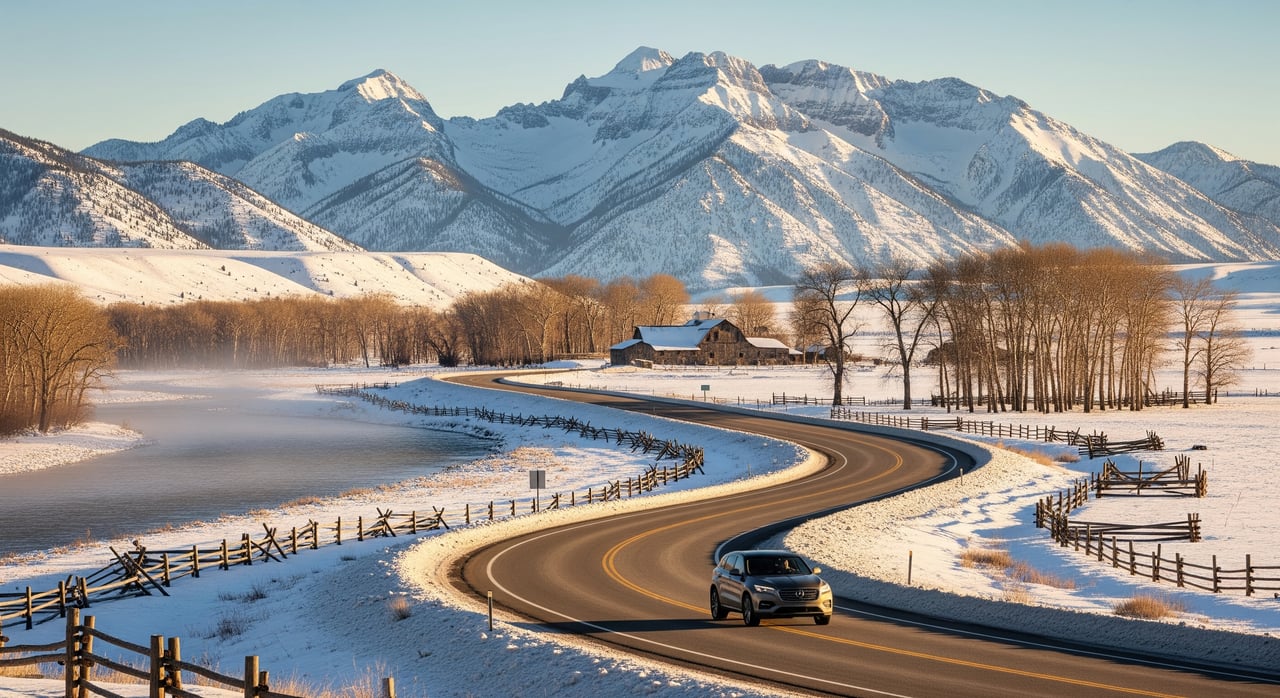
Cold blue skies in the morning and a whiteout by afternoon. If you spend a winter in Paradise Valley, you know how fast conditions can shift on US‑89. Whether you commute to Livingston, plan a delivery, or head to Gardiner and the North Entrance of Yellowstone, a smart plan keeps you safe and on time. In this guide, you’ll learn what to expect, what to check, and how to prepare your vehicle and route for winter. Let’s dive in.
Why US‑89 matters in winter
US‑89 is the main artery through Paradise Valley, connecting Livingston to Gardiner. It carries the most winter traffic and typically sees the most frequent maintenance. East River Road runs roughly parallel in places along the valley floor, serving local residences and ranches. It is not a primary state highway and usually receives less frequent plowing.
Paradise Valley’s winter hazards
Paradise Valley winters bring frequent snow, episodes of strong wind, and quick temperature swings. You should expect snowpack on pavement, narrowed lanes, and slick refreeze in shaded sections and overnight. Blowing snow can create whiteout conditions that reduce visibility, even when snowfall is light.
Black ice is a common hidden hazard after thaws or during cold snaps following a storm. During shoulder seasons, brief thaws can lead to slush or localized pooling that refreezes at night. Avalanche danger is more relevant on high mountain passes than along the valley corridor, but heavy mountain snow can still produce secondary hazards like runoff or rock and ice fall near cuts and cliffs.
Check these sources before you go
- Montana 511 and the Montana Department of Transportation are your primary sources for real‑time road conditions, closures, incident alerts, and highway cameras. Check conditions within a few hours of departure and again right before you leave.
- The National Weather Service posts local forecasts for the Livingston and Paradise Valley area along with winter weather advisories, watches, and warnings. Use it for snowfall rates, temperatures, and wind potential.
- Yellowstone National Park provides separate road status for the North Entrance and interior park roads. If you plan to continue past Gardiner, verify park rules and seasonal access.
- Park County Road & Bridge shares local road priorities and updates for county roads like East River Road. Park County Sheriff and Montana Highway Patrol post incident and enforcement notices.
During active storms, recheck conditions en route when safe to do so. Third‑party apps can help, but always confirm critical updates with official sources.
Plowing and maintenance realities
State highways like US‑89 are top priority for winter operations. They typically receive more frequent plow and anti‑icing passes than county roads. After a storm, US‑89 will usually be passable sooner, though you may still encounter icy stretches, narrow lanes, and snow berms at intersections.
County corridors such as East River Road usually have lower priority and fewer resources. Expect them to stay snow‑packed or icy longer after a storm. During multi‑day events, reopening and cleanup can take hours to days depending on severity, staffing, and incident volume.
Tow and recovery response can take longer in remote stretches, especially at night. Share your travel route and timing with someone, and build extra time into your day.
Pre‑trip planning checklist
- Check official sources: Montana 511 for US‑89 status and cameras; NWS forecast for wind, temperature, and precipitation; Park County for East River Road; and NPS for park access if heading to Yellowstone.
- Tires and traction: Winter tires are strongly recommended in cold and snow. Verify tread depth, and carry traction devices if restrictions might be posted.
- Vehicle readiness: Test battery, antifreeze, lights, and wipers. Top off washer fluid.
- Emergency kit: Warm layers and blankets, water, high‑calorie snacks, phone charger or power bank, flashlight, shovel, ice scraper, sand or traction mats, basic first aid, road flares or triangles, and a tow strap.
- Fuel plan: Keep your tank fuller in winter. Services are sparse between communities.
- Timing: Leave early, avoid night travel during storms, and identify safe pull‑offs and service stops in Livingston and Gardiner.
- Communication: Tell someone your route and ETA. Save local non‑emergency and towing numbers.
Driving best practices on US‑89
Reduce speed well below the posted limit when the road is snow‑packed or icy. Increase following distance and avoid sudden braking or sharp steering inputs that can lead to a slide. In suspected black ice, steer gently and use minimal braking.
Watch for plows making alternating passes. Give them space and never pass unless you have full visibility and a clear, safe opportunity. Expect narrowed lanes and snow berms near intersections following plow operations.
Night driving increases risk because temperatures drop and visibility is limited. If possible, travel during daylight and time your trip between storm bands. If you must drive at night, slow down, widen your following gap, and be patient.
East River Road vs. US‑89
Use US‑89 when you need the most reliable winter route through the valley. It is maintained more frequently and is the designated arterial. East River Road serves local access for residences and ranches and may remain snow‑packed or icy longer after a storm.
If you rely on East River Road for daily life, check Park County updates and be ready for slower travel. During prolonged storms, expect uneven conditions between segments and more drifting across open fields. If East River Road is unplowed or unreliable, route to US‑89 when possible.
If conditions deteriorate
Have a clear fallback. Identify safe places to wait it out in Livingston or Gardiner. Keep contingency funds and phone numbers for towing and local lodging in case you need to stop.
In an emergency, call 911. For non‑emergencies, contact the Park County Sheriff, Montana Highway Patrol, or your towing provider. If stranded and it is safe, stay with your vehicle, conserve heat, increase visibility with flares or triangles, and wait for help.
For Yellowstone‑bound trips
Road status inside Yellowstone can differ from the state highway you used to reach Gardiner. Park roads follow seasonal schedules and winter access rules that can include snowcoach or snowmobile only segments. Check the National Park Service road status for the North Entrance and interior roads before you travel, and verify again on arrival.
A sample winter trip plan
- 24 hours out: Scan the NWS forecast for snowfall rates, wind, and temperatures. Note any watches or warnings that overlap your travel window.
- Night before: Check Montana 511 for US‑89 conditions and cameras. Top off fuel and washer fluid, lay out winter gear, and load your emergency kit.
- Morning of: Recheck Montana 511 and county updates. If continuing into Yellowstone, verify NPS road status. Text your route and ETA to a contact.
- On the road: Drive with extra space, slow down for shaded curves, and watch for plows. If visibility drops to unsafe levels, pull into a safe turnout or serviced area and wait for improvement.
- Arrival: Confirm your return plan and timing with your contact. If conditions worsen, adjust your schedule rather than pushing through.
Moving, commuting, and daily life
If you are relocating to Paradise Valley or nearby Gallatin communities, winter road planning becomes part of your routine. Schedule deliveries, showings, and contractor visits with weather windows in mind. Consider winter tire investment and a vehicle with all‑wheel or four‑wheel drive for rural properties and unpaved driveways.
For property owners, coordinate with local plow services and keep access areas clear of berms after storms. Place reflective markers on driveway edges and around culverts to help equipment operators and reduce damage during snow operations.
Ready access to reliable information and a realistic plan keeps your winter days smooth, even when the weather is not. If you want local insight on communities and properties that fit your daily routes and travel comfort, we are here to help.
Start the conversation — expert guidance for your Bozeman‑area sale or purchase. Reach out to Unknown Company for calm, practical guidance from search through closing.
FAQs
Where can I check US‑89 conditions before driving?
- Use Montana 511 for real‑time road conditions, cameras, incidents, and closures. Check again just before departure and recheck during storms when safe.
How is East River Road maintained compared with US‑89?
- East River Road is a county corridor with lower plow priority than the state highway, so it often remains snow‑packed or icy longer after a storm.
Are winter tires or chains required in Montana?
- There is no statewide winter tire mandate, but traction or chain restrictions can be posted for specific highways during hazardous conditions and must be followed.
What are the biggest winter hazards on US‑89?
- Expect snowpack on pavement, black ice and refreeze in shaded areas, blowing snow that reduces visibility, and snow berms after plow passes.
What should I do if I get stranded in the valley?
- Call 911 for emergencies. If safe, stay with your vehicle, conserve heat, make yourself visible, and contact the Park County Sheriff or a tow provider for help.